
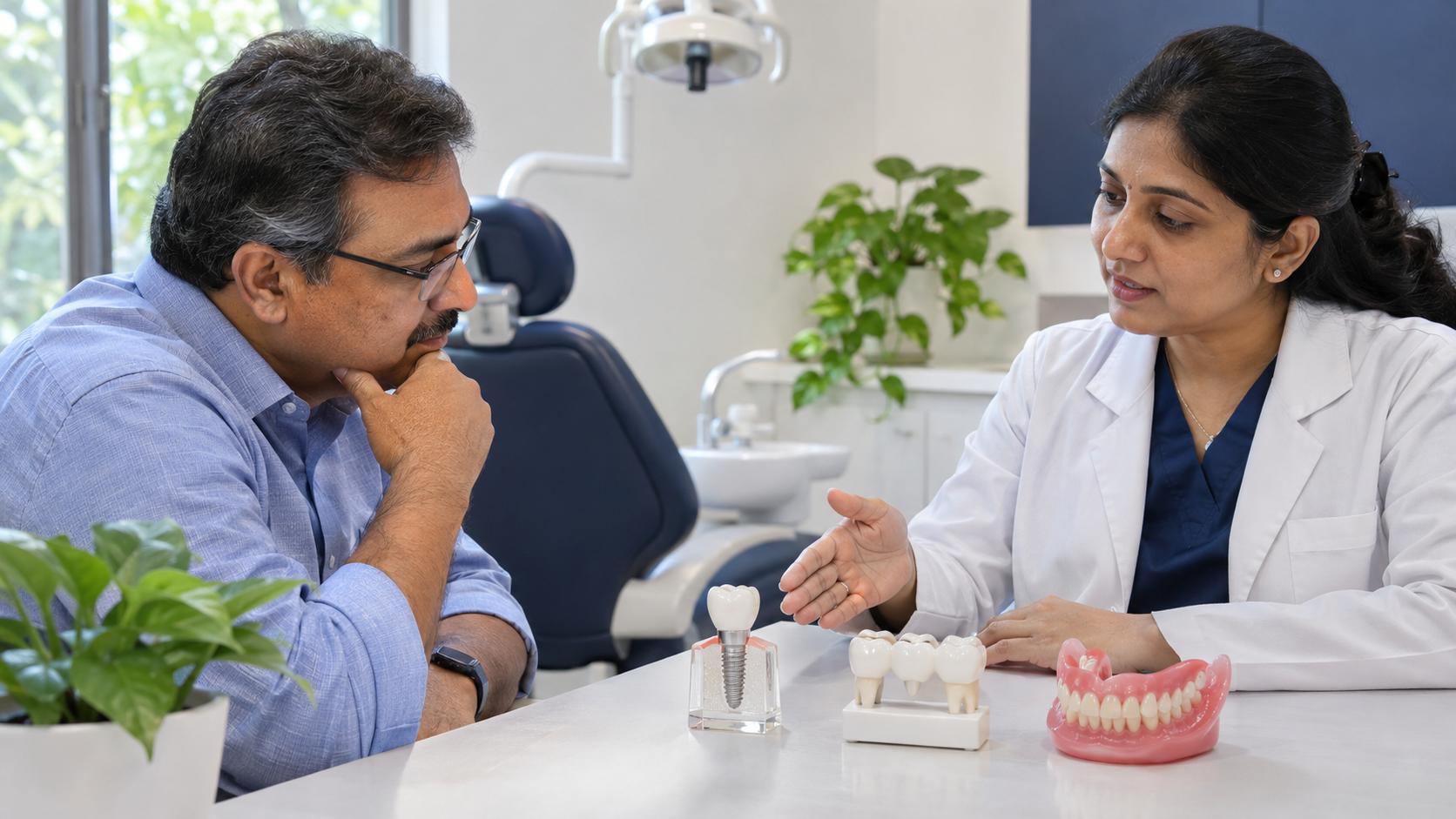
Dental Implants vs Bridges vs Dentures: Comparing Your Options
A missing tooth can change how comfortably you chew, speak or smile. If you are comparing dental implants, bridges and dentures, you may be wondering which option would suit you best.
These treatments replace missing teeth in different ways. The right choice depends on your remaining teeth, gums, jawbone, general health and the care you can manage at home.
At Boppana Dental Care, patients can discuss tooth replacement options based on an individual assessment. This guide explains the differences between dental implants, conventional tooth-supported bridges and removable dentures, including treatment stages, maintenance and cost considerations.
Why Replacing a Missing Tooth May Matter
Missing teeth can affect chewing, speech and appearance. Nearby teeth may shift, and bone changes can occur around the space.
However, the same treatment is not appropriate for every gap. A dentist needs to assess the position of the missing tooth, your bite and the health of the remaining teeth before recommending whether and how to replace it.
Explain what you notice in everyday life. Difficulty chewing, food collecting in a gap or concern about a visible missing tooth can help guide the discussion.
What Are Dental Implants?
A dental implant is an artificial root placed surgically in the jawbone. It can support a replacement crown or help support a bridge or denture.
A single implant crown does not usually depend on preparing the neighbouring teeth for support. However, implant treatment requires an assessment of your gums, available bone and general health.
If you are exploring dental implant treatment in Bachupally or Miyapur, ask your dentist to explain the proposed restoration as well as the implant placement procedure.
What Does Implant Treatment Involve?
Treatment can involve several stages, including assessment, implant placement, healing and fitting the replacement teeth. Healing may take months, and some patients need additional procedures such as bone grafting.
Your dentist should explain:
- Whether implant placement is suitable for you.
- Whether preparatory treatment is needed.
- The expected treatment and healing stages.
- What you will use while the final replacement is being prepared.
- The cleaning and follow-up required.
Implants need daily cleaning and regular review. Possible complications include infection, damage to nearby structures and failure to integrate or remain stable. Smoking and some health conditions can affect healing.
An implant should not be presented as a guaranteed lifetime replacement.
What Is a Dental Bridge?
A conventional tooth-supported bridge fills a gap with an artificial tooth or teeth supported by neighbouring teeth.
The bridge stays in place during everyday use. It is removed by a dentist rather than taken out at home for cleaning.
Some bridge designs require shaping the supporting teeth. Other designs use different attachment methods. Ask which design is being proposed and what changes, if any, would be needed to the teeth beside the gap.
When Might a Bridge Be Considered?
A bridge may be a suitable fixed option for some patients, including those who do not choose implant surgery.
Suitability depends on:
- The size and position of the gap.
- The condition of the supporting teeth.
- Gum health.
- The bite and forces placed on the replacement.
- Whether the area can be cleaned effectively.
Bridges are among the treatments discussed within prosthodontic care for missing teeth. Implant-supported bridges are a separate design that uses implants rather than neighbouring natural teeth for support.
What Are Removable Dentures?
Dentures replace missing teeth with an appliance that can be removed.
A partial denture replaces some missing teeth. A complete denture replaces all the teeth in the upper or lower jaw.
Conventional removable dentures do not require implant placement. They need an appropriate fit, daily cleaning and review as the mouth changes.
What Should You Expect With Dentures?
There may be an adjustment period while you become familiar with eating and speaking with a denture.
Repeated soreness, looseness or difficulty chewing should be assessed. Do not assume discomfort must simply be tolerated.
Implant-retained dentures also exist. This means the treatment categories can overlap: implants can support a removable denture as well as fixed replacement teeth.
Before treatment, clarify whether the proposed replacement will stay fixed in your mouth or be removed for cleaning.
Dental Implants vs Bridges vs Dentures: Key Differences
| Feature | Implant-Supported Crown | Conventional Tooth-Supported Bridge | Conventional Removable Denture |
|---|---|---|---|
| Main support | Implant placed in the jawbone | Neighbouring natural teeth | Gums and, for some partial dentures, remaining teeth |
| Daily removal | Fixed crown stays in place | Stays in place | Removed for cleaning |
| Implant surgery | Required | Not required | Not required |
| Main planning considerations | Bone, gum health, general health and healing | Condition of supporting teeth and any preparation needed | Fit, support, comfort and daily handling |
| Ongoing care | Cleaning around the implant and restoration | Cleaning around supporting teeth and beneath the bridge | Cleaning the appliance and caring for the mouth |
This table compares common designs. Implant-supported bridges and implant-retained dentures have different features.
Which Option May Suit Your Situation?
The number of missing teeth matters, but it does not decide the treatment on its own. Their position and the condition of the remaining mouth are also important.
If One Tooth Is Missing
Ask your dentist to compare an implant crown with a suitable tooth-supported bridge.
Discuss whether the neighbouring teeth are healthy, whether either already needs a crown and whether implant placement is appropriate. A removable replacement may also be considered.
If Several Teeth Are Missing
The location of the gaps affects how a replacement can be supported.
Ask which teeth would support a bridge or partial denture and how those supporting teeth would be maintained. If implants are proposed, clarify the number and position planned for your individual case.
If All Teeth in One Jaw Are Missing
The discussion may include complete dentures and whether an implant-supported or implant-retained option is suitable.
Not every full-arch replacement uses the same number of implants or the same attachment method. Ask to see a model of the proposed design and have the cleaning routine demonstrated.
What Happens During a Tooth Replacement Assessment?
A consultation begins with your concerns and health history.
Tell the dentist when the tooth was lost, whether you have discomfort and whether an existing bridge or denture has become difficult to use. Bring a current medication list and details of previous dental treatment if available.
The dentist examines your remaining teeth, gums and bite. Imaging may be recommended when needed to assess the area and plan treatment.
A dental diagnosis and treatment assessment helps establish the findings that guide your options. Photographs and online descriptions cannot provide the same information as an examination.
Before agreeing to treatment, make sure you understand:
- What the replacement will attach to.
- Whether other teeth need treatment.
- Whether surgery is involved.
- The expected stages and visits.
- The alternatives suitable for your mouth.
- What maintenance will be needed.
Dental Implant, Bridge and Denture Cost Factors
Treatment costs depend on the individual plan. A starting price may not include everything needed to complete treatment.
Ask for a written, itemised estimate that explains whether it includes:
- Examination and imaging.
- Preparatory dental treatment.
- Implant placement, where applicable.
- The final crown, bridge or denture.
- Temporary replacement teeth.
- Laboratory work.
- Review visits and adjustments.
Also ask how future repairs, replacement components or denture relining would be charged.
Two quotations may describe different treatments or include different stages. Compare what is included before comparing the total price.
Plan Everyday Care Before Choosing Treatment
Choosing a tooth replacement also means understanding its cleaning routine.
Caring for an Implant Restoration
Cleaning is needed around the implant and replacement teeth. Ask the dental team which cleaning aids suit the exact design and how to use them.
Caring for a Bridge
The supporting teeth and the area beneath the replacement tooth need attention. Ask for a demonstration of how to clean these areas.
Caring for a Removable Denture
A removable denture needs a routine for taking it out, handling it safely and cleaning it. Follow the instructions given for the material and design.
If small cleaning tools are difficult to handle, mention this before treatment. A suitable plan should consider what you can comfortably manage at home.
Keep the review schedule recommended for your mouth and restoration. Arrange an assessment if a replacement becomes loose, causes repeated soreness or becomes difficult to clean. Avoid trying to reshape or repair it yourself.
Choosing a Tooth Replacement Clinic in Bachupally or Miyapur
When comparing dental implant clinics or other tooth replacement services near you, look for clear explanations of the assessment, alternatives, treatment stages and follow-up.
Useful questions include:
- Who will assess my mouth and carry out each stage?
- Why is this option suitable for my findings?
- What are the alternatives?
- What risks and recovery stages should I understand?
- How many visits may be needed?
- Who should I contact if the replacement becomes uncomfortable?
Location is relevant because treatment and maintenance can involve repeated visits. Check where consultations, procedures and follow-up appointments will take place.
Appearance and Function Both Matter
If a gap is visible when you smile, discuss the appearance of the replacement as well as chewing and speech.
Explain your expectations before treatment is planned. The shape, position and appearance of replacement teeth need to be considered alongside the supporting teeth, gums and bite.
Ask what can reasonably be achieved with each suitable option and whether a temporary replacement will be used during treatment.
Frequently Asked Questions
Are dental implants always better than bridges?
No. There is no single option that is best for everyone. Your bone, gums, remaining teeth, general health and preferences influence the recommendation.
Can dentures replace only a few missing teeth?
Yes. Partial dentures replace some missing teeth, while complete dentures replace a full upper or lower set.
Can an implant support more than one replacement tooth?
Implants can support crowns, bridges or dentures. The number and position of implants are planned for the individual case.
Will a tooth replacement last forever without maintenance?
No replacement should be considered maintenance-free. Ask about cleaning, review visits and the possibility of repairs or replacement components.
Can I choose treatment from photographs alone?
Photographs can illustrate appearance, but a dentist needs an assessment to judge suitability and plan treatment.
How should I compare treatment estimates?
Compare the treatment design, materials, investigations, preparatory care, temporary teeth and follow-up included in each estimate. The total price alone may not explain the differences.
Discuss Missing Tooth Replacement at Boppana Dental Care
Boppana Dental Care offers dental implant and prosthodontic services for patients considering missing tooth replacement.
If you are looking for dental care in Bachupally or Miyapur, arrange a dental assessment to discuss suitable options and the expected treatment stages.
Bring questions about your missing teeth, an existing replacement or your daily cleaning routine. Your treatment recommendation should reflect your examination and individual needs.
Bachupally: 9000409422 | 040-45319099
Miyapur: 8008004918 | 040-42307479
This article provides general patient education and does not replace an individual dental assessment.